Malawi's Parliament has been forced to pause its planned investigations into several public institutions and sectors, after the High Court issued an interim order stopping the Speaker and Parliament from establishing or operationalising joint ad hoc committees for the probes.
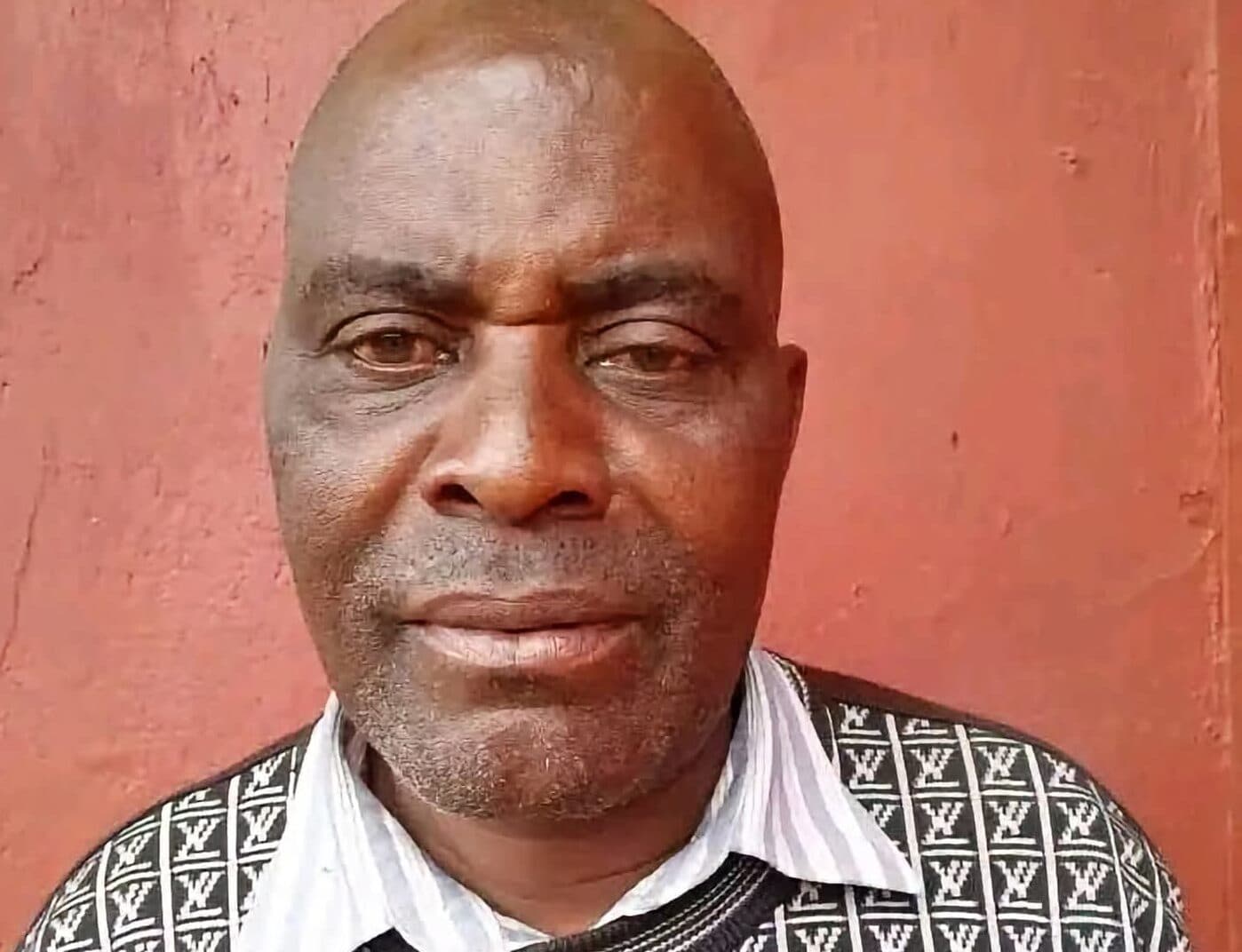
The order, issued by High Court judge Allan Muhone on September 4, 2026, followed a judicial review application by Austin Mkoka in Judicial Review Cause No. 030 of 2026.
The court granted leave for judicial review and ordered the matter to proceed to an inter partes hearing within 14 days.
The order does not amount to a final finding that Parliament acted unlawfully. Rather, it temporarily preserves the status quo while the court considers the legal challenge — an important distinction, given that the investigations concern matters with direct consequences for public services, government finances and citizens.
Court order suspends probes
The planned parliamentary probes cover a wide range of issues, including fuel transportation, alleged irregularities at the National Oil Company of Malawi (Nocma), the stalled Salima-Lilongwe Water Supply Project, pension administration, water procurement, electricity supply, passport services, delays in the justice system, prisons, mining, tobacco and fertiliser coupon distribution.
The breadth of the proposed investigations shows why parliamentary oversight matters. These are not isolated administrative questions — they touch sectors that affect households, businesses, public finances and the delivery of essential services.
Parliament, for instance, wanted to examine the use of local and foreign transporters in the movement of petroleum products.
Figures presented by Speaker Sameer Suleman indicated that, between January and June 2026, Nocma used foreign transporters for 4,080 trips — 84 percent of the total — compared with 788 trips by local transporters.
Those figures alone do not prove wrongdoing, but they raise legitimate questions about how public institutions make procurement and transportation decisions, particularly at a time when Malawi is struggling with foreign exchange shortages and high costs.
Why the investigations matter
The proposed Nocma investigation also includes allegations concerning changes to banking details linked to contracts — allegations that require evidence and verification, not conclusions that wrongdoing occurred.
The same principle applies to the proposed investigation into the Salima-Lilongwe Water Supply Project, where Parliament said it wanted to examine concerns over funding, alleged obstruction and claims of possible kickbacks.
Whether such allegations are true can only be established through proper investigation and evidence.
The water and electricity investigations are equally significant. Reliable water and electricity are essential to households, hospitals, schools, farms and businesses, while failures in these sectors can increase operating costs and weaken economic activity.
Parliament also planned to examine Malawi's electricity reforms, including the unbundling of the Electricity Supply Corporation of Malawi into separate entities, persistent blackouts, equipment failures, maintenance and delays in obtaining replacement parts.
In the mining sector, lawmakers wanted to examine agreements, regulation, government revenue and informal mining — particularly important as Malawi seeks to use its mineral resources to boost government revenue and attract investment.
The proposed investigations into pensions, justice and prisons also go beyond institutional administration.
Delays in pension payments can affect people who depend on their benefits, while delays in court cases and overcrowding in prisons raise questions about access to justice and the protection of citizens' rights.
Against this background, the court order creates an important constitutional question: where should the line be drawn between Parliament's oversight responsibilities and the powers of other arms of government and public institutions?
The Constitution gives the National Assembly power to establish committees and joint committees for scrutiny of legislation and the performance of its other functions.
But the existence of that power does not automatically settle every question about how far parliamentary investigations can go, or whether particular procedures are lawful.
That is why the judicial review process matters. It provides a legal forum for testing the limits of public power, without assuming in advance that either Parliament or the applicant is right.
The court's intervention should therefore not be interpreted as protecting any institution from accountability.
Nor should the investigations be treated as proof that the targeted institutions committed wrongdoing. Both claims would go beyond the evidence currently available.
A separate inquiry, a different legal test
The development becomes more interesting when compared with Parliament's separate inquiry into the Chikangawa plane crash that killed former vice-president Saulos Chilima and eight others on June 10, 2024.
Parliament established a fresh ad hoc committee in March 2026 to conduct the inquiry, after President Peter Mutharika directed that previous investigations be reviewed following concerns about gaps in the available reports.
The committee was given a 90-day mandate and tasked with reviewing previous findings and identifying gaps. Its hearings have continued, with witnesses from the Malawi Defence Force, airport security and aviation-related institutions appearing before it.
The continuation of that inquiry does not mean Parliament has been given special permission to investigate while its other probes have been stopped. The two situations have different legal circumstances.
There is no evidence that the court order issued in the Mkoka case was intended to stop every parliamentary investigation. The order specifically concerns the establishment and operation of the joint ad hoc committees targeted by the legal challenge.
This distinction is critical. A court does not normally need to stop an inquiry simply because another parliamentary committee is continuing its work. What matters is the legal basis and circumstances of each proceeding.
The Chikangawa inquiry also demonstrates why parliamentary investigations can matter when major public questions remain unanswered.
During the hearings, witnesses have provided information that has prompted further questions about procedures surrounding the aircraft, its passengers and the events leading to the crash.
But here too, Parliament must separate questions from conclusions. A parliamentary inquiry should establish facts through documents, testimony and expert evidence, rather than begin with a predetermined answer. The same standard should apply to the 12 investigations now on hold.
Economic stakes and the cost of delay
The bigger concern is what happens if the legal process becomes prolonged. If investigations into fuel, electricity, water, pensions, mining and other public services remain suspended for an extended period, questions about accountability may go unanswered while the underlying problems continue.
This matters at a time when Malawi's economy is already under significant pressure. The World Bank projected real economic growth of only 2.3 percent for 2026, and warned of continuing pressures from high inflation, foreign exchange shortages, debt and weak productive capacity.
In such an environment, failures in public institutions can have consequences beyond government offices.
Fuel shortages and high transport costs affect businesses, electricity problems disrupt production, water shortages affect communities, and weak management of public resources can reduce the money available for essential services.
The World Bank has also highlighted weaknesses in public financial management and state-owned enterprise governance, while calling for stronger institutions and better oversight of public resources.
This makes effective accountability more than a political issue. It is an economic necessity.
A test for Parliament and the courts
Parliamentary oversight, however, must itself operate within the law. A legislature cannot strengthen accountability by weakening the legal safeguards that govern the exercise of public power.
The High Court's intervention therefore presents Malawi with a test on both sides. Parliament must demonstrate that its oversight powers are exercised lawfully, fairly and on the basis of evidence, while the courts must ensure legal challenges are handled without unnecessarily preventing legitimate democratic scrutiny.
The answer should not be to choose between accountability and legality. Malawi needs both.
The current dispute provides an opportunity to clarify how Parliament can investigate public institutions without exceeding its constitutional mandate, and how courts should intervene when that mandate is challenged.
If the investigations eventually proceed, their credibility will depend on the evidence they produce, the institutions and individuals given a fair opportunity to respond, and whether their recommendations lead to measurable improvements.
If they do not proceed, important questions raised by Parliament may remain unresolved.
For citizens, the issue is therefore bigger than the fate of the 12 planned investigations. It is about whether public institutions can be held accountable while remaining within the boundaries of the law. That balance is central to good governance.
Malawi does not need accountability without legality, nor legality without accountability. It needs institutions strong enough to scrutinise public power, courts independent enough to test its limits, and public officials willing to answer evidence-based questions about how national resources and services are managed.
The High Court case has temporarily put Parliament's planned investigations on hold. What happens next will help define not only the fate of those probes, but also the practical boundaries of parliamentary oversight in Malawi.