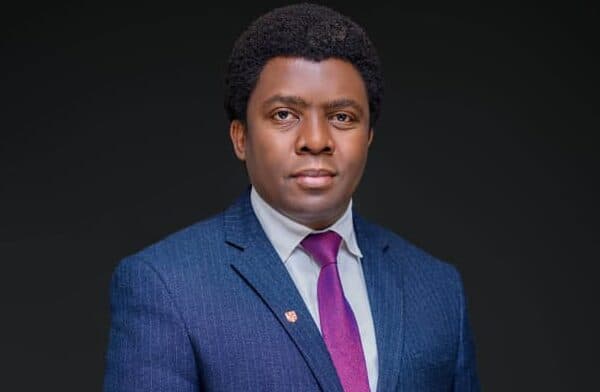
He was late Saulos Chilima’s political deputy, confidant, government bridge and successor. So why is his voice missing from the inquiry?
There is a curious omission at the heart of Parliament’s renewed inquiry into the plane crash that killed former Vice-President Saulos Chilima: Michael Usi. The question is not whether Usi is implicated in the crash—there is no basis for making such an allegation—but why a parliamentary inquiry determined to reconstruct the circumstances surrounding Chilima’s final journey has apparently not considered one of the people who was closest to him politically and personally as a critical witness.
Usi was not an ordinary UTM politician. He was Chilima’s vice-president in the party and his chosen deputy at a time when UTM had several founding heavyweights and experienced political figures from whom Chilima could have selected a second-in-command. His choice of Usi therefore says something about the relationship between the two men. They worked closely, communicated frequently and, by all appearances, enjoyed a level of trust that made Usi one of the people closest to Chilima’s political life. That proximity alone does not make him suspicious; it makes him potentially important to the evidence.
His position became even more unusual because Usi was also able to operate within the Lazarus Chakwera administration while maintaining his relationship with Chilima. He effectively occupied a bridge between the two political centres at a time when relations between Chakwera and Chilima had become increasingly complicated. Reuters reported that the relationship between the two leaders had deteriorated as Chilima prepared to challenge Chakwera in the 2025 presidential election. In that politically sensitive environment, Usi was uniquely positioned to know what was happening on both sides of the relationship.
Then Chilima died, and the political geometry changed dramatically. Within days, Chakwera appointed Usi as Vice-President, placing him in the very office vacated by the man who had previously been his political boss and running mate. That succession does not make Usi suspicious. But it makes his knowledge of Chilima, his plans, relationships, movements and communications even more relevant to an inquiry seeking to establish what happened before the aircraft disappeared.
This is where the parliamentary inquiry needs to confront an uncomfortable question: what exactly did Usi know about Chilima’s final movements, and has the committee properly tested that knowledge? The inquiry has said it intends to cast a wide net, with more than 150 witnesses expected to be invited from institutions and entities connected to the aircraft and the flight. If the committee is prepared to hear from such a large number of people, it is difficult to understand why someone with Usi’s extraordinary proximity to Chilima would not at least be considered for testimony.
The importance of Usi becomes clearer when viewed against what the inquiry is already uncovering. Former Secretary to the President and Cabinet Colleen Zamba told the committee that Chilima intended to attend Ralph Kasambara’s funeral in his personal capacity and had not informed then-President Chakwera beforehand. That testimony demonstrates that the inquiry is not merely examining the aircraft, weather, aviation procedures and technical failures. It is also reconstructing the decisions, communications, intentions and circumstances surrounding the flight.
If that is the scope, Usi becomes difficult to overlook. He could potentially shed light on Chilima’s plans, his movements, his communications with political and government figures, his intentions regarding the funeral, changes to his schedule, people who knew about the journey and conversations he had in the days or hours before the flight. He may have nothing new to offer. He may simply confirm what other witnesses have already told the committee. His account may even contradict another witness. But those are precisely the reasons an inquiry exists: to test competing accounts and close gaps in the timeline.
There is another intriguing dimension. Usi himself was among those who publicly supported the need for an inquiry into Chilima’s death. In October 2024, he said an inquiry would be conducted and described it as necessary. Parliament is now conducting that inquiry, yet the man who was Chilima’s political deputy, close ally and eventual successor does not appear to have emerged as an obvious witness. That creates a strange situation: one of the people closest to Chilima has supported the search for answers, while the body conducting that search has seemingly not made his testimony a central part of the public inquiry.
There is an even deeper layer. After becoming Vice-President, Usi retained staff who had worked under Chilima, according to his communications director. That means his proximity to Chilima did not simply end with the crash; he inherited elements of the institutional machinery that had surrounded the former Vice-President. Again, this does not imply wrongdoing. But for an inquiry attempting to reconstruct Chilima’s final days, it potentially means access to another layer of knowledge about schedules, communications, working relationships and official routines.
Perhaps the committee has already spoken to Usi privately. Perhaps his testimony is scheduled. Perhaps investigators have concluded that documentary evidence and other witnesses adequately cover the issues he could address. Perhaps there is an entirely legitimate reason he has not appeared before the committee. If so, there is no controversy. But if he has not been considered, then the committee should explain why, because its own stated approach is to invite people with relevant information—including information that may not have been captured in previous investigations—to come forward.
That is why the question should not be framed as “Does Usi know something?” That wording unfairly suggests suspicion. The better question is: “What can Usi tell the inquiry that it does not yet know?” Those are very different questions. A serious inquiry should not avoid a witness because his testimony might be uncomfortable, politically sensitive or inconvenient. It should call relevant people precisely because their evidence can confirm, challenge or complicate the existing narrative.
The committee also needs to resist the temptation to turn the inquiry into a purely technical investigation. Aircraft systems, weather conditions, pilot decisions, radar, communications and maintenance records are obviously critical. But a plane does not decide where to fly itself. People make plans, communicate, change schedules, issue instructions, receive information and make decisions. Understanding the final journey therefore requires reconstructing not only what happened to the aircraft, but what was happening around the people inside it before the aircraft took off.
And that is where Usi’s absence becomes so conspicuous. He was Chilima’s chosen political deputy, his running mate, a close ally, a link between Chilima and the Chakwera administration and, after Chilima’s death, his successor as Vice-President. That is an extraordinary concentration of proximity to the man whose final journey the committee is now trying to reconstruct.
None of this means Usi should be treated as a suspect. Quite the opposite. He should be treated as a potentially valuable witness whose evidence should either be heard or whose exclusion should be explained. If he knows nothing relevant, the committee can establish that. If he knows something important, Malawi deserves to hear it. If his account conflicts with another witness, the committee can test the contradiction. If it confirms the existing narrative, that too strengthens the inquiry.
The ultimate test of the Chilima inquiry will not be the number of witnesses it summons or the volume of documents it examines. It will be whether it follows every credible evidentiary lead, including politically sensitive ones, wherever they go.
And that leaves Parliament with a deceptively simple question: How can an inquiry seeking to reconstruct the final chapter of Saulos Chilima’s life fully assess the circumstances surrounding his death without seriously considering the testimony of one of the men who was closest to him?
Until that question is answered, Michael Usi remains one of the most conspicuous missing voices in Malawi’s search for the truth about Chikangawa.