The human cost of conflict is immense. Global headlines document the devastating consequences in the Middle East and territories, Sudan, the eastern Democratic Republic of the Congo, the Sahel, and beyond. It is a significant cost in terms of both lives lost and harmed, particularly for children, and communities fragmented. In 2025 alone, at least 6,266 children were reported killed according to the UN report on Children and Armed Conflict (CAAC) .
Yet beyond the front pages, another, more devastating, crisis is taking lives every day. Diseases linked to unsafe water, sanitation, and hygiene contribute to the deaths of more than 1,000 children under the age of five each day. Two out of five of these children will be from just ten countries of Africa . The silent emergency of unsafe water and sanitation receives far less attention but remains one of the most urgent barriers to a healthy, thriving, and prosperous society.
At the recent signing of our partnership with the Japan International Cooperation Agency (JICA), I reflected on the negative multiplier effect that conflict, environmental disasters, and outbreaks have in communities: the systems protecting human life can quickly break down in these conditions, particularly access to safe water, sanitation, hygiene, and healthcare.
However, the alternative is also true: investments in robust sanitation economies can not only address the impact on children’s lives every day, but also build resilience in communities in the face of crisis when handwashing and safe sanitation become even more critical to protecting public health. Behaviours and infrastructure for safe sanitation and hygiene cannot simply be switched on in a crisis - they depend on an established ecosystem: awareness of practical solutions that communities can purchase locally and want to use.
No single organisation can build markets in isolation. Tackling a crisis of this magnitude demands collaboration: bringing together private-sector innovation, public-sector trust and scale, and the expertise of local organisations working within communities.
Our JICA partnership is more than just a commitment to expand access to safe toilets and handwashing facilities, it is in a shared desire to build sustainable sanitation and hygiene markets that work for homes, schools, healthcare facilities, and refugee sites across all communities.
JICA’s development expertise and relationships with governments complement LIXIL’s product innovation through SATO to empower African communities to create their own sanitation economy where affordable products are readily available, and consumers are aware and have the dignity of choice to invest in solutions that they want and that benefit their home or community.
We have already seen what this can achieve in Malawi where LIXIL partnered with Water For People and Phalombe Hardware to improve the lives of more than 100,000 people . Rather than simply introducing SATO products, we worked with local partners to address affordability, access to stock, and community demand; the foundations of a functioning local market.
Using products supplied through our manufacturing hub in Tanzania, we helped establish a revolving financing mechanism and worked with local savings and credit organisations to enable entrepreneurs to purchase stock. Alongside NGOs and local government, we also supported campaigns to build awareness and demand.
The results speak for themselves. From an initial supply of 10,000 units, more than 18,500 additional units have been reordered. Entrepreneurs have grown their businesses, households have greater choice, and a sustainable market has begun to take shape.
In the Kenyan Kakuma and Kalobeyei refugee settlements and surrounding communities, sanitation and hygiene are also closely connected to public health, resilience, and self-reliance. Building on our existing work there, our partnership with JICA can help align practical solutions and local partnerships with the Kenyan Government’s Shirika Plan, a policy aiming to enable refugees to participate in economic and social activities.
A toilet or tap alone cannot create refugee self-reliance in the same way that one project cannot guarantee access to safe, affordable sanitation. But together, public policy, product innovation, and partnerships on the ground can create a strong ecosystem that enables long-term benefits in health and economic growth.
Innovation and the private sector must sit within a wider system. Products need supply chains, communities need awareness and trust, entrepreneurs need opportunities, and governments need partners that support their priorities and accelerate progress.
Having already improved sanitation for more than 100 million people, we are now working towards reaching 100 million more by FY2031, expanding our work with JICA in countries including Kenya and Malawi.
Investments today should not be about one-off projects or specific emergency interventions, but investments in building local markets supported by governments, NGOs, businesses, entrepreneurs, and communities themselves to improve dignity and economic empowerment in everyday lives and strengthen resilience before the next crisis begins.
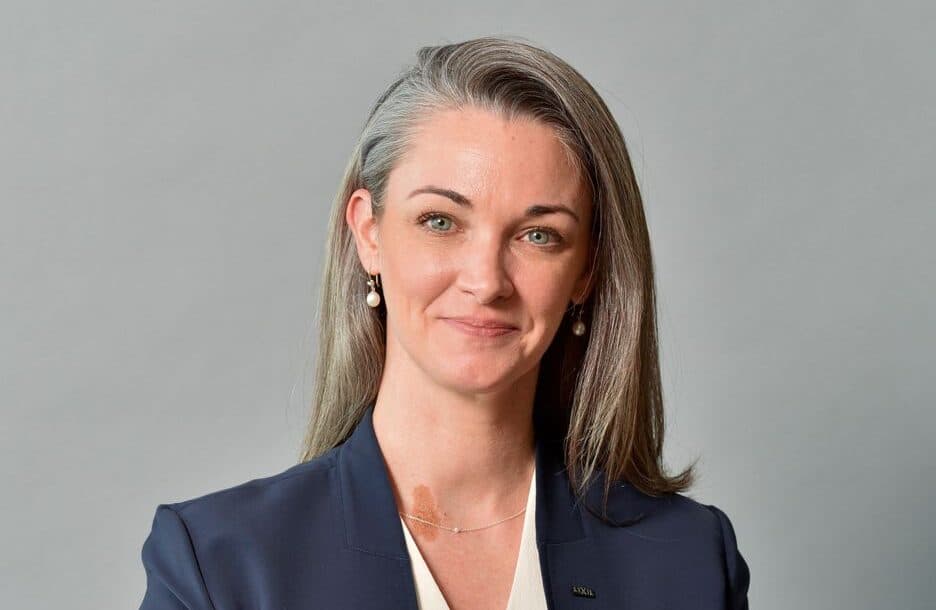
* Erin McCusker is Executive Officer, Executive Vice President and Chief Impact Officer at LIXIL Corporation, where she leads communications, external affairs and impact strategy. She joined LIXIL in 2018 as Chief Strategy Officer for SATO, becoming SATO Leader in 2020 and Senior Vice President in 2022, with responsibility for SATO and LIXIL Public Partners.