Malawi's opposition leader has delivered a blistering verdict on President Peter Mutharika's first year back in office, accusing the government of failing on virtually every front — from fuel and food to foreign exchange — while handing out a damning new catchphrase that's set to haunt the administration.
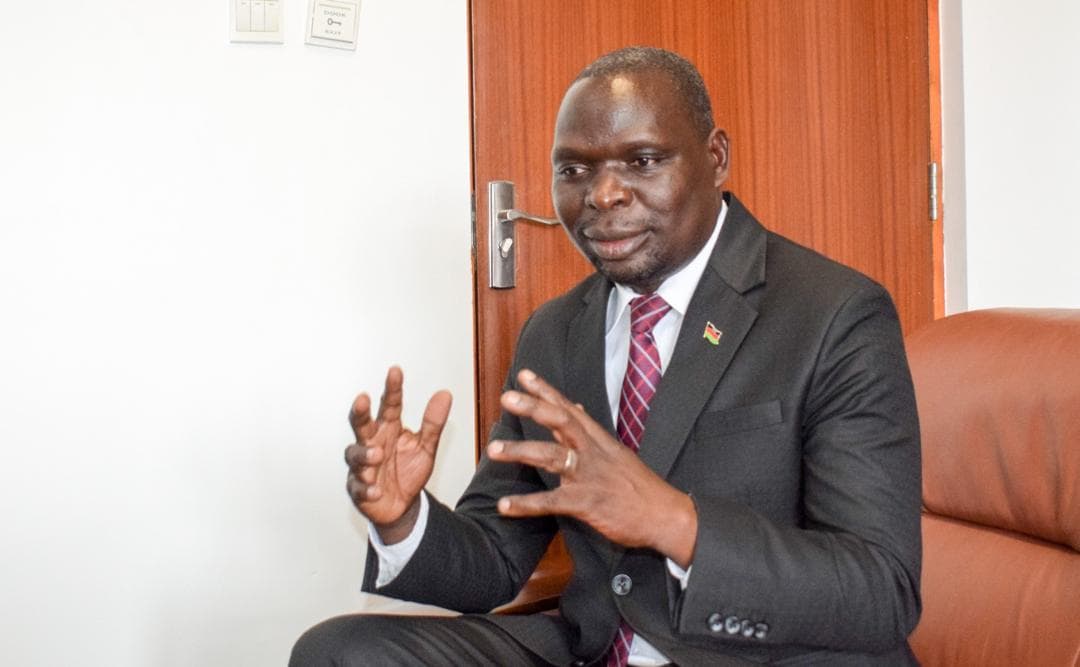
Simplex Chithyola Banda, Leader of the Opposition in Parliament, tore into the Democratic Progressive Party government in a strongly worded statement marking President Mutharika's first year, accusing officials of a total lack of seriousness in tackling the economic and social misery gripping ordinary Malawians.
At the heart of his attack was the country's crippling fuel crisis, which Chithyola said has made a dramatic and painful return — with long queues and dry pumps back on Malawi's streets.
He laid the blame squarely on the government's decision to scrap open tendering for fuel purchases in favour of a secretive Government-to-Government arrangement paid for in US dollars, a move he said froze Malawian transporters out entirely.
"The record on fuel speaks for itself," Chithyola declared, pointing out that when his own Malawi Congress Party was last in power, fuel availability stood at just 40 per cent and was successfully raised to 70 per cent without hurting consumers.
Today, he said, Malawians are once again spending entire nights stuck in queues.
The opposition leader reminded voters exactly what they were promised at the ballot box — jobs, food, cheap fertiliser, free secondary education, real development through the Constituency Development Fund, and a swift end to corruption — insisting he was speaking out of constitutional duty rather than malice, as the official check on executive power.
And he saved his sharpest line for the government's flagship claim of success: cheap maize prices. Chithyola said the DPP's boast of "cheap nsima" had been achieved only by forcing farmers — who had already paid through the nose for expensive farm inputs — to sell at rock-bottom prices.
"Malawians have realised something simple," he said. "Cheap nsima cannot buy fuel, cheap nsima cannot pay school fees, cheap nsima cannot buy medicine and cheap nsima cannot fix the economy."
He revealed the devastating reality facing maize farmers, who have been forced to sell their crop at just K20,000 a bag — equivalent to K400 per kilogram — far below the government's own minimum price of K500. More than 75 per cent of smallholder farmers, he said, are being forced to sell below cost simply because they have nowhere to store their harvest and desperately need cash.
He accused ADMARC of failing to step in and rescue struggling farmers, claiming vendors have instead snapped up the bulk of the maize while the National Food Reserve Agency has been powerless to help — even as government now prepares to import a staggering 200,000 metric tonnes of maize from abroad.
Tobacco farmers, he warned, have fared even worse, enduring what he branded the worst year on record, with auction income expected to collapse by 50 per cent.
Turning to foreign exchange, Chithyola delivered perhaps his most damning assessment yet, describing Malawi's current shortage as the worst in living memory.
He pointed to the Foreign Exchange Notice of 2026, issued on 7 September, which bars anyone from holding more than $1,000 in foreign cash without Reserve Bank permission — with travellers limited to taking out just $100.
"A government that has to police a traveller's US$1,000 has lost control of the economy," he said, revealing that importers are now waiting up to three months just to access $10,000, while hospitals run dangerously short of medicines.
He also sounded the alarm over collapsing donor confidence, warning it takes years to build but only moments to destroy.
He pointed to Norway's shock announcement that it will close its embassy in Lilongwe by the end of July 2027 — bringing a 27-year relationship and roughly K93 billion in annual support to an abrupt end — alongside Britain's plans to slash aid by 60 per cent next financial year, rising to a devastating 90 per cent cut by 2028/29.
In his bleakest warning yet, Chithyola cautioned that Malawi is barrelling toward a full-blown hunger crisis, with national maize production languishing at just 2.9 million metric tonnes against a national need of 3.6 million.
He projected serious food shortages stretching from October 2026 through to January 2027, with up to 7.5 million Malawians facing food insecurity next year.
Determined to offer more than criticism, Chithyola unveiled a sweeping six-point rescue plan, demanding Parliament vet all government contracts above K1 billion, that Reserve Bank orders be made legally binding with personal liability attached, and the introduction of a Whistleblower Protection Act offering a 10 per cent reward.
Among his most explosive proposals was a call to reverse the controversial Amaryllis Hotel deal entirely, recovering K90 billion plus interest, alongside forensic audits of NOCMA, ADMARC, NFRA and the Affordable Inputs Programme.
He also demanded an immediate return to open tendering for fuel purchases, the rebuilding of Malawi's 60-million-litre strategic fuel reserve, and 70 per cent of fuel transport contracts reserved exclusively for Malawian operators.
His plan further called for scrapping the current farm input scheme in favour of a transparent e-voucher system, backing local fertiliser factories, and launching a "One Youth One Hectare" initiative.
On agriculture, he demanded ADMARC pay farmers K500 per kilogram in cash, and called for the national grain reserve to be rebuilt to 300,000 metric tonnes.
Rounding off his plan, Chithyola called for every learner to be guaranteed one textbook, the recruitment of 20,000 new teachers, the creation of a K100 billion Youth Enterprise Fund offering loans at just 5 per cent interest funded by recovered state assets, and the long-awaited dualisation of the M1 road between Lilongwe and Blantyre.
He delivered a brutal closing verdict on the administration's first year in power.
"DPP promised proven leadership, but one year on has proven leadership in failure, mismanagement and inflicting misery," he said.
"But Malawi is not for sale — and when Malawians think of a better Malawi, MCP is the answer."